
Inside the crash test: Supporting safer mobility solutions
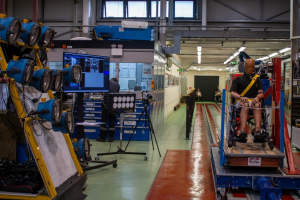
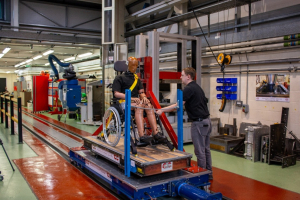
What does a wheelchair, Formula One car and medical stretcher all have in common? They all need to undergo rigorous crash testing, to ensure maximum safety for their occupiers.
The Cranfield Impact Centre (CIC) recently facilitated a crash test for Sunrise Medical, a Leading Global pioneering high-performance wheelchair design and manufacturer.
Careful documentation is essential before the first crash test. The team meticulously capture pre-test photos and measurements of each individual component of the wheelchair. These records are crucial to refer to once the first test takes place to observe how each component has performed.
The test involved simulating a 30mph car crash. From the safety cabin, we observed as the wheelchair was subjected to crash forces designed to replicate a real-world scenario. Witnessing the test first-hand provides a powerful reminder of the engineering, regulations and extensive assessments that help protect wheelchair users every day.
Following the impact, the wheelchair underwent a thorough post-test inspection. Engineers assessed each component for signs of damage, deformation or failure, with particular attention paid to any parts that could detach, fracture or create sharp edges that might pose a risk to users. In a pleasing conclusion, the Sunrise Medical wheelchair satisfied the requirements of ISO 7176: Part 19.
A typical testing programme takes around half a day and involves around three tests in total. The Cranfield Impact Centre is the only ISO:17025 approved test site in the UK for wheelchair testing to the ISO 7176: Part19 standard.
If you are interested in our state-of-the-art facilities at the CIC, please contact Dr Jim Watson j.w.watson@cranfield.ac.uk 07789044980